Why job searching belongs on your phone
Almost nobody looks for work in one uninterrupted sitting. Job searching happens in fragments — on a commute, in a queue, in the twenty minutes before bed, in the gap between two meetings. The tools most people use were built for the opposite: a desk, a large screen, an hour of quiet, and a spreadsheet somewhere to remember what you sent.
That mismatch is why so many searches stall. Not for lack of ambition, but because the moment you actually have to search in is five minutes long, and opening a laptop to re-filter a job board does not fit in five minutes. A phone does. Resumly for iPhone is built around the shape of the time people really have.
A deck, not a list
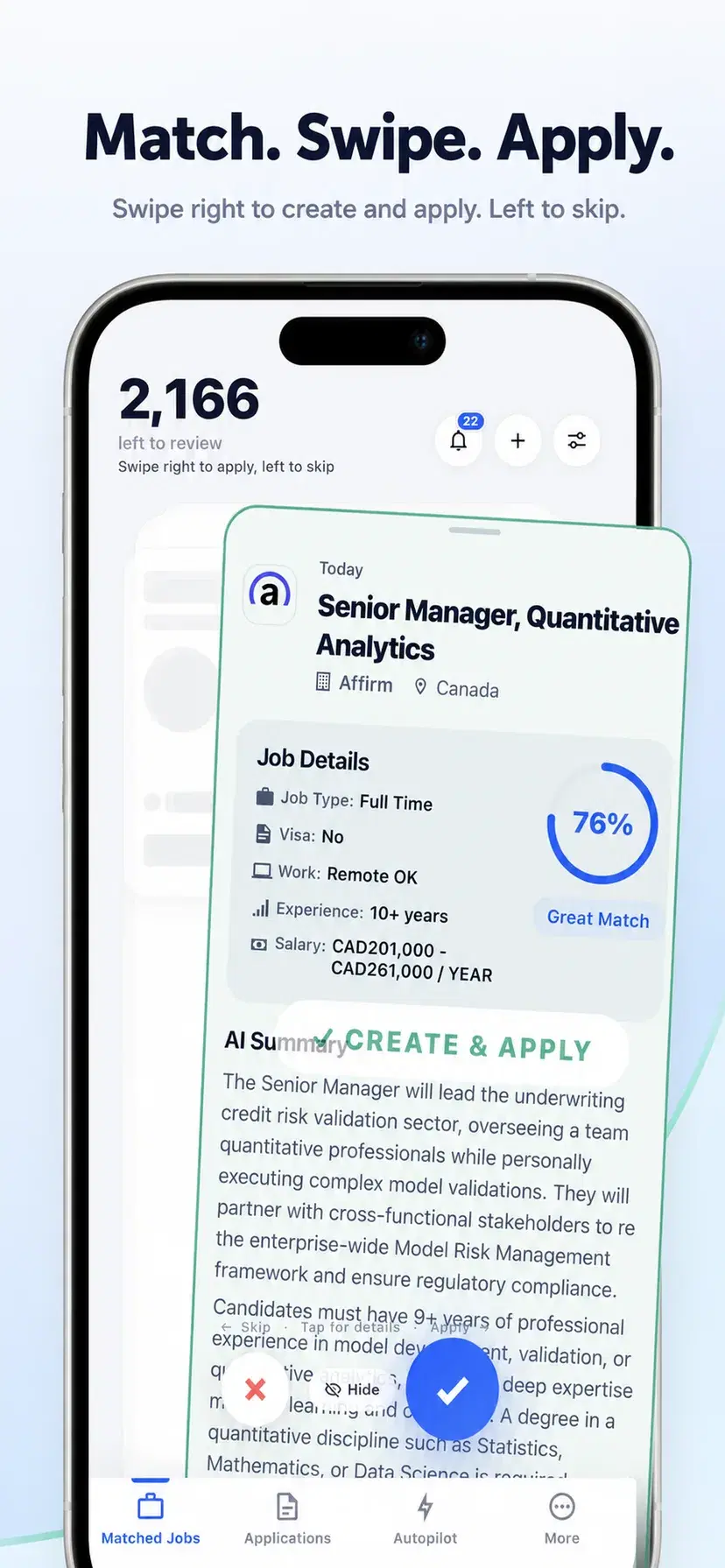
A job board hands you a list and leaves the work to you: open, read, decide, go back, repeat, lose your place. Resumly gives you one role at a time, with its match score against your actual resume, and two gestures. Swipe right to start a tailored application. Swipe left to skip. Skipped jobs remain available in your search history if you want to revisit them later.
That makes a long result set easier to review in short sessions: one decision at a time, without losing your place in a paginated list.
Applications that happen without you
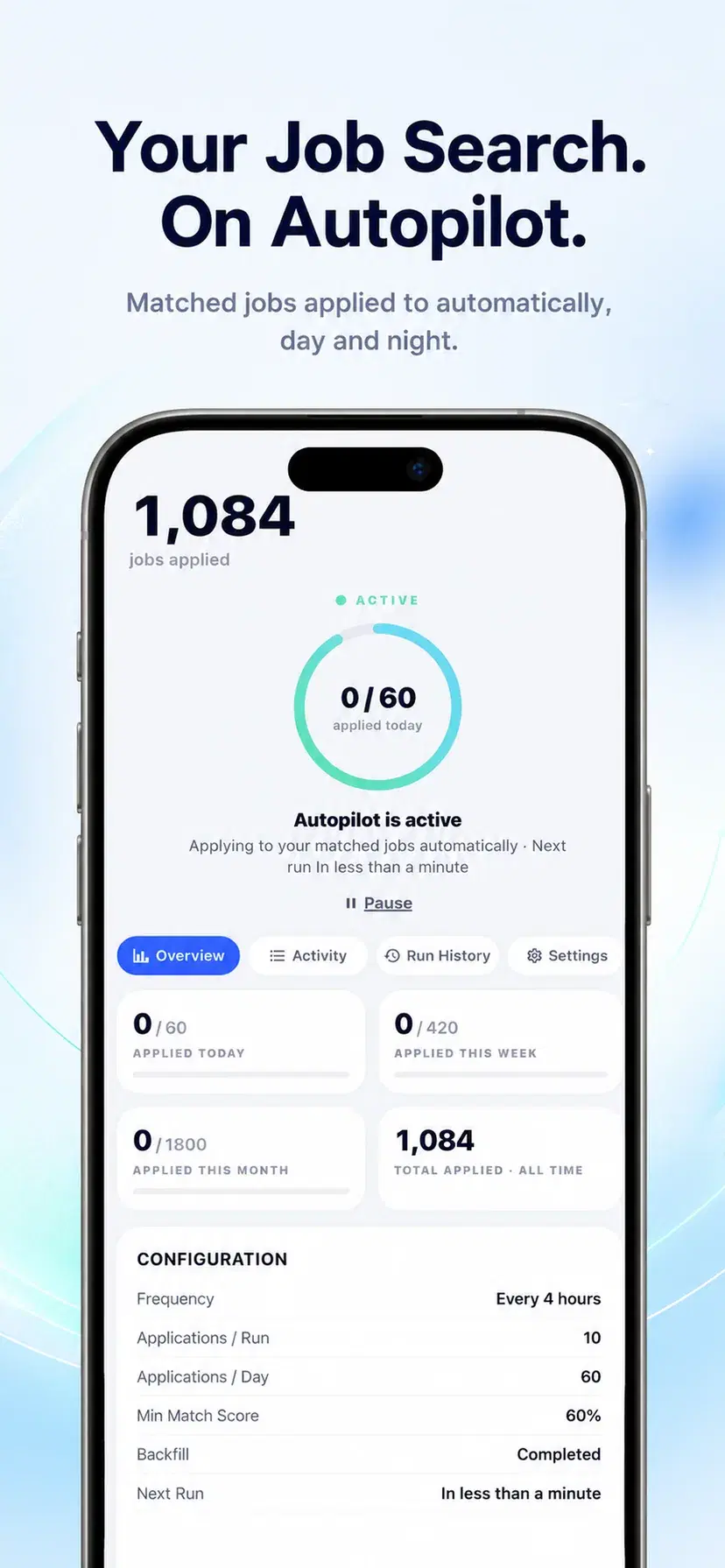
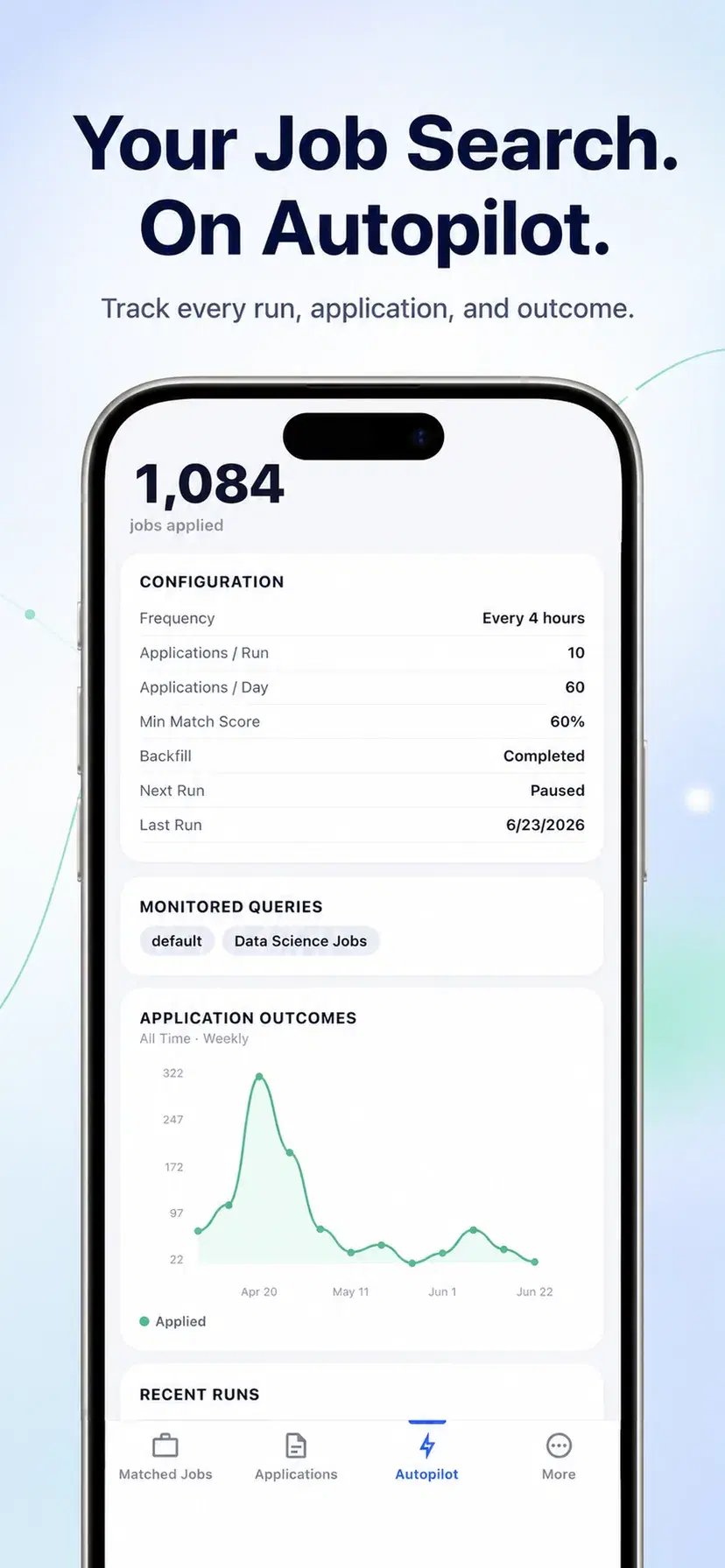
Swiping is still work. Autopilot is the version where the work happens anyway. You set the frequency, how many applications you are willing to send a day, and the minimum match score you will accept — and it works through eligible roles on supported application sites, whether or not you opened the app.
It is off until you switch it on, capped by limits you choose, pausable in a single tap, and every submission status is listed in the app. The point is not to remove you from your own job search; it is to stop the search dying on the days you have no time for it.
A resume per job, not one resume
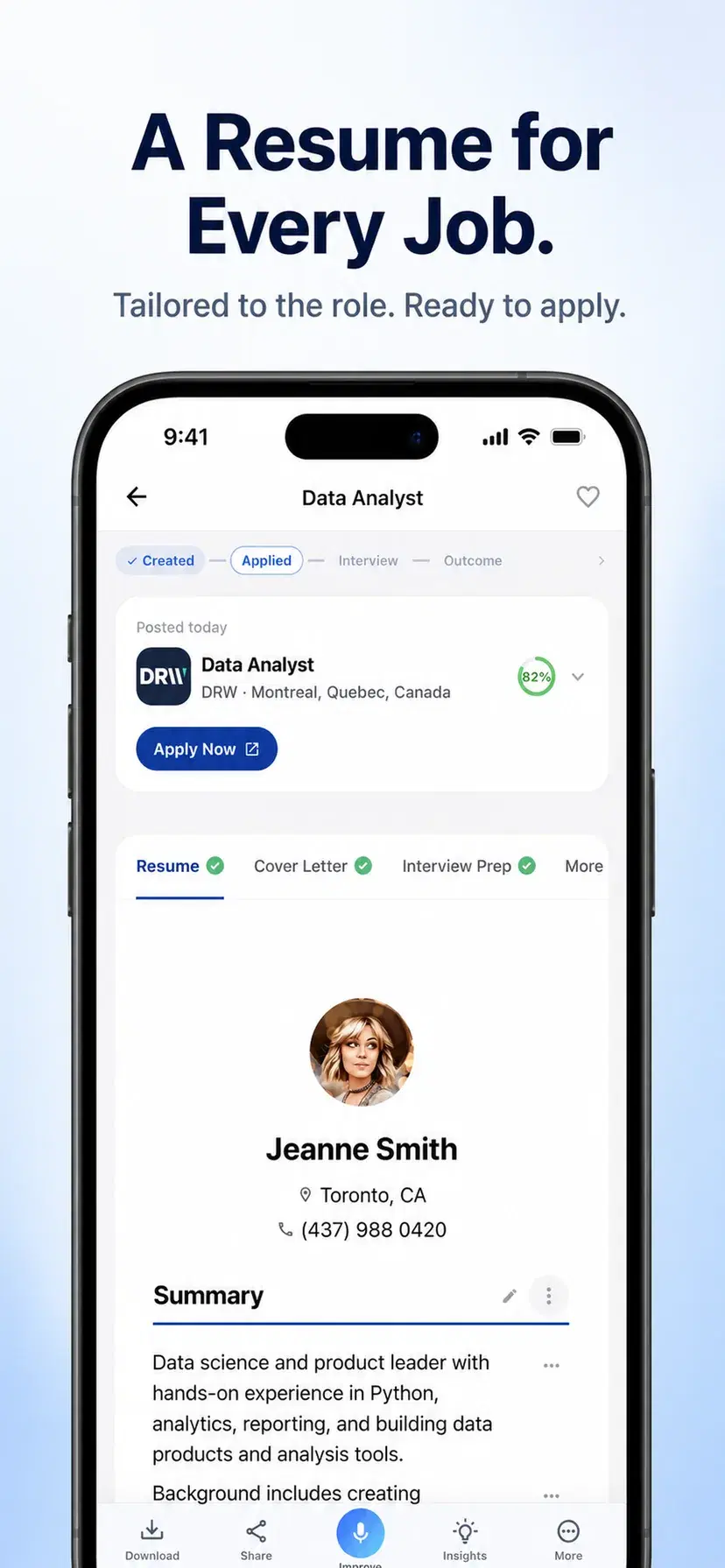
One generic resume can bury the experience that matters most for a particular role. Each posting emphasizes a different mix of responsibilities, skills, and language, even when the job titles look similar.
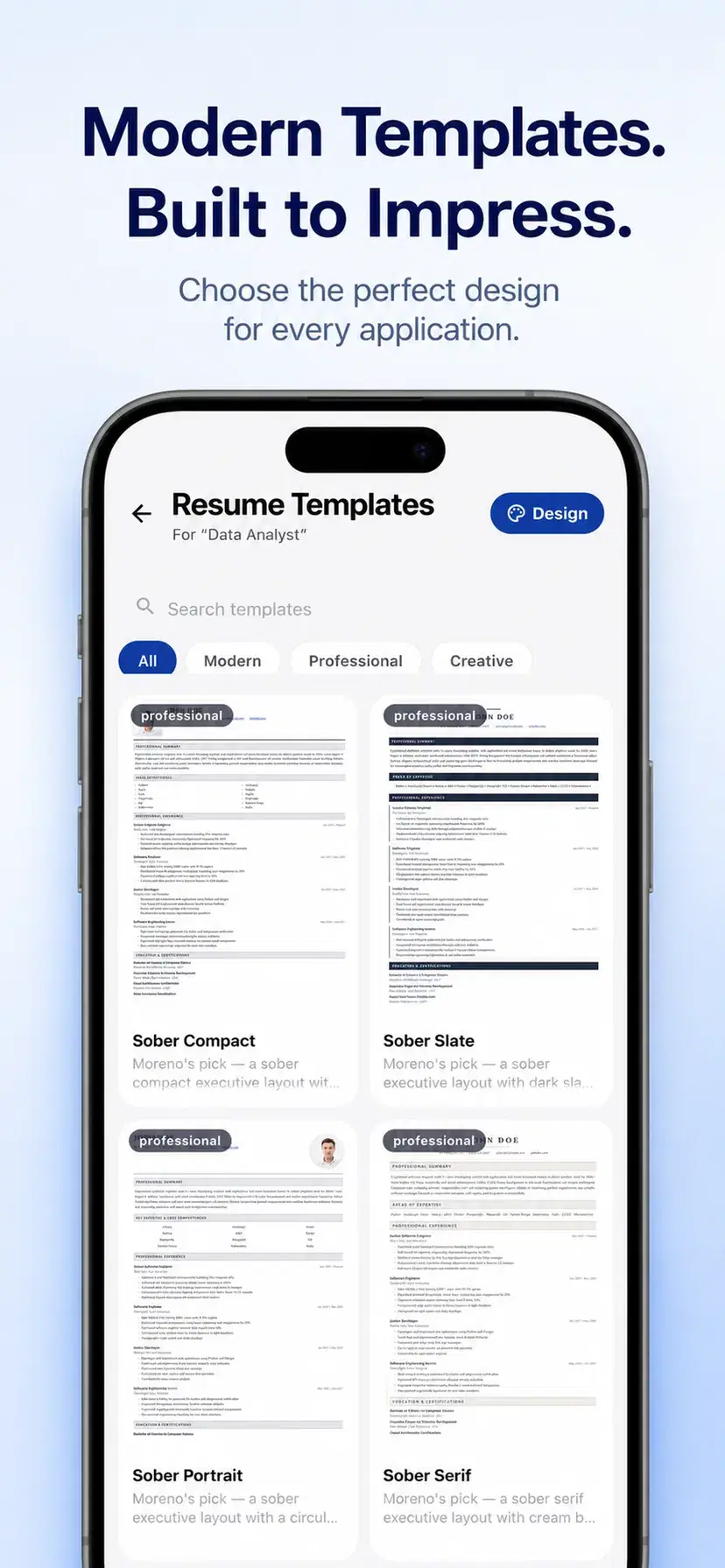
Resumly rewrites your resume around the posting in front of you, surfacing the experience that role actually asks for, in a layout parsers can read. The same context can produce a cover letter when you want one, without rebuilding either document field by field on a phone.
Knowing what is actually working
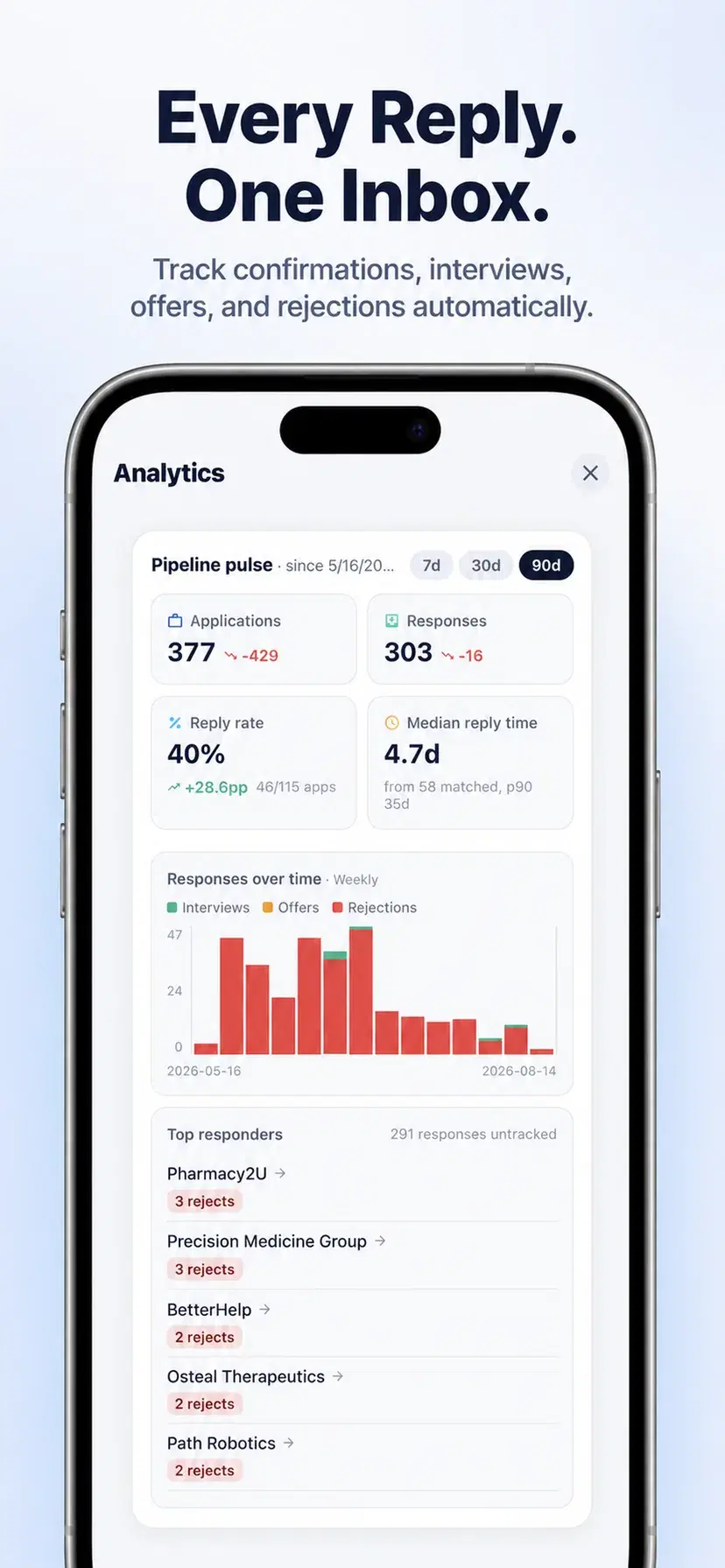
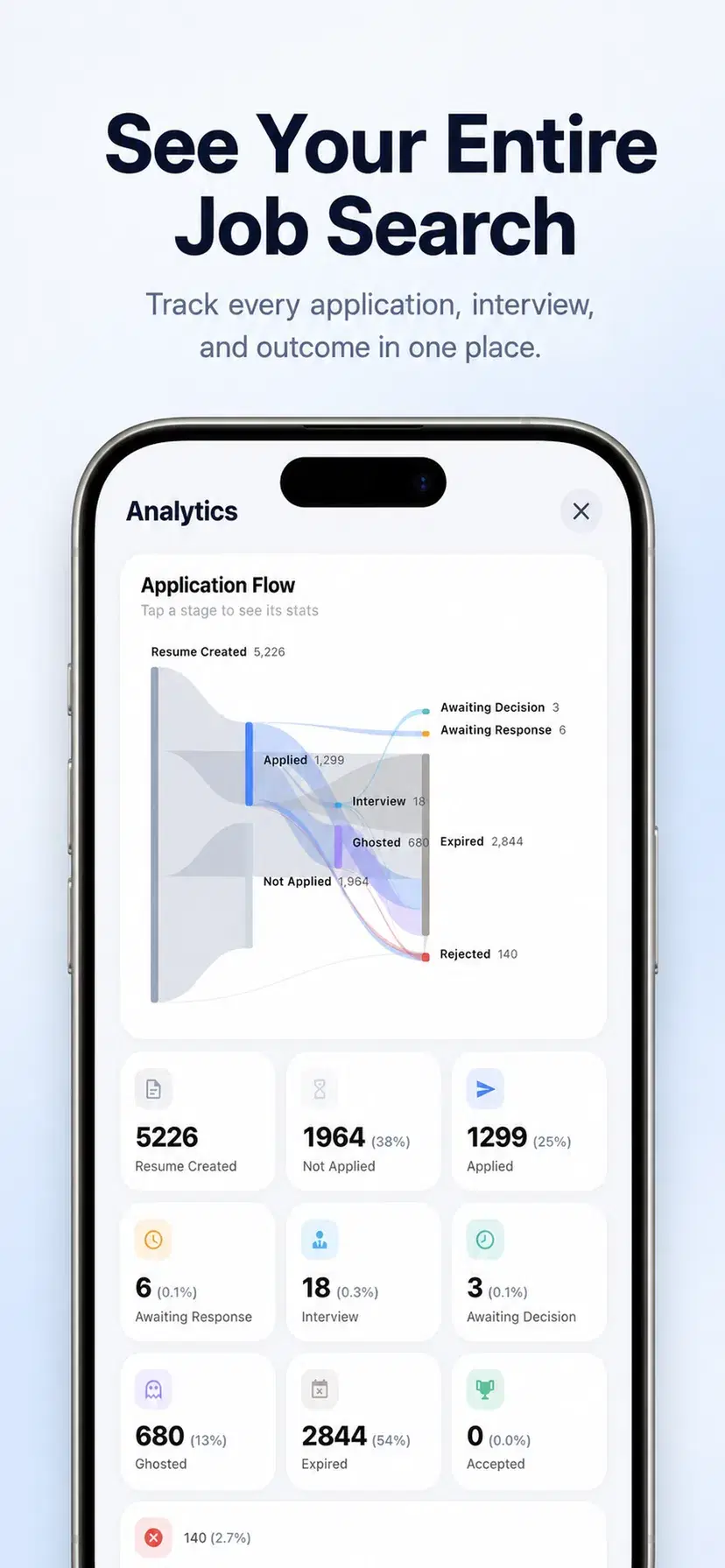
Most job seekers cannot answer basic questions about their own search. How many applications went out last month? What share got any reply at all? How long does a response usually take? Which companies never answer?
For supported applications submitted through Resumly and messages received in your Resumly inbox, the app can answer those questions without a separate spreadsheet. You get a pipeline view, reply rate, median response time, and a clearer record of which employers respond.
What the app does that a mobile browser cannot
The Resumly web app works in a phone browser, and for some people that is enough. The native app earns its place in three ways.
Gestures. The swipe deck is the interface, and swiping is a native interaction. In a browser it is an approximation.
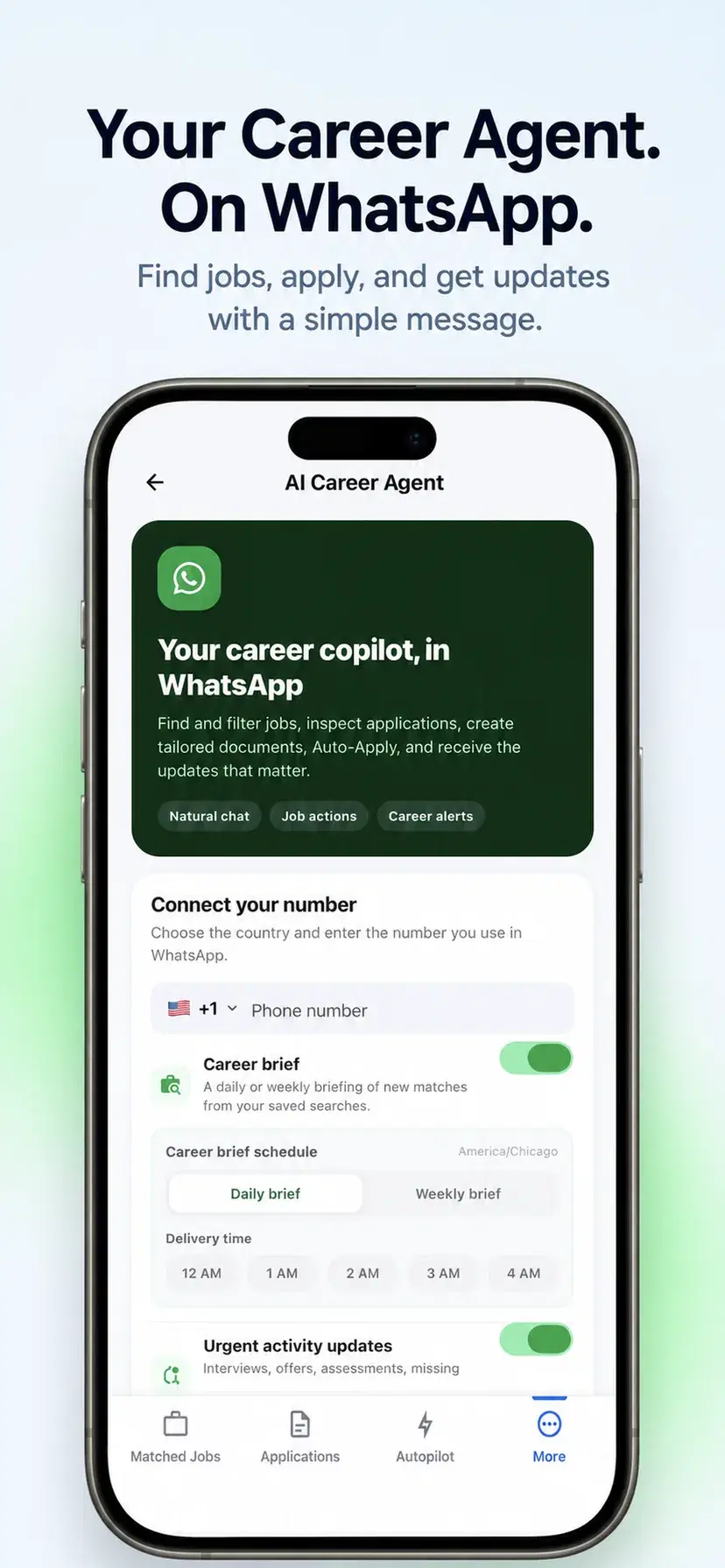
Notifications. When you enable them, interview replies, action-needed updates, and Autopilot summaries can reach you as push notifications instead of waiting in an email folder.
It is one tap away. An icon on a home screen gets opened. A bookmark does not. The whole argument for mobile is reducing the distance between intent and action, and an installed app is the shortest version of that distance.
Start with the resume you already have
Upload the resume you already have — no rebuilding it field by field. Resumly reads your experience and builds your profile from it. Tell it the titles and locations you want, and whether you will consider remote. Resumly searches and scores what it finds against your background, then brings the results into your matched jobs deck.
From there you can review by hand, switch on Autopilot, or do both. It is free to start, there is no card, and everything syncs with the web app if you prefer to do longer sessions at a desk.